The most breathtaking needlework isn’t merely seen; it’s felt through a tactile landscape where light dances across the lustrous curves of pure silk. You’ve likely stood over a flat piece of linen, feeling the urge to breathe life into a static design whilst fearing the snag of a needle might ruin your finest materials. It’s a common hesitation amongst artists who crave dimension but feel overwhelmed by the technicalities of ribbon widths and fabric backings. We understand that choosing the right silk ribbon for embroidery is the bridge between a simple hobby and a true artisanal craft.
This guide promises to show you how to master the fluid elegance of pure silk to create raised floral textures that practically bloom from the cloth. You’ll learn to distinguish between 2mm and 7mm widths and gain the confidence to thread needles without stress. We’ll explore Hand Woven Silk Dupion grounds and the “ribbon lock” technique, transforming your textiles into three-dimensional masterpieces. Let’s begin by awakening your senses to the unique possibilities of this exquisite medium.
Key Takeaways
- Learn how to select the perfect width of silk ribbon for embroidery, from delicate 2mm accents to bold 7mm focal points that create lifelike floral dimension.
- Discover why Hand Woven Silk Dupion serves as the premier structural foundation for raised needlework, ensuring your stitches remain secure and elegant.
- Master the “Ribbon Lock” method and tension control to prevent fraying whilst maintaining the soft, airy loft that defines professional silk ribbon work.
- Gain expert advice on sourcing authentic 100% silk and preserving the vibrant colours of your finished masterpieces through proper storage and care.
The Sensorial Allure of Silk Ribbon for Embroidery
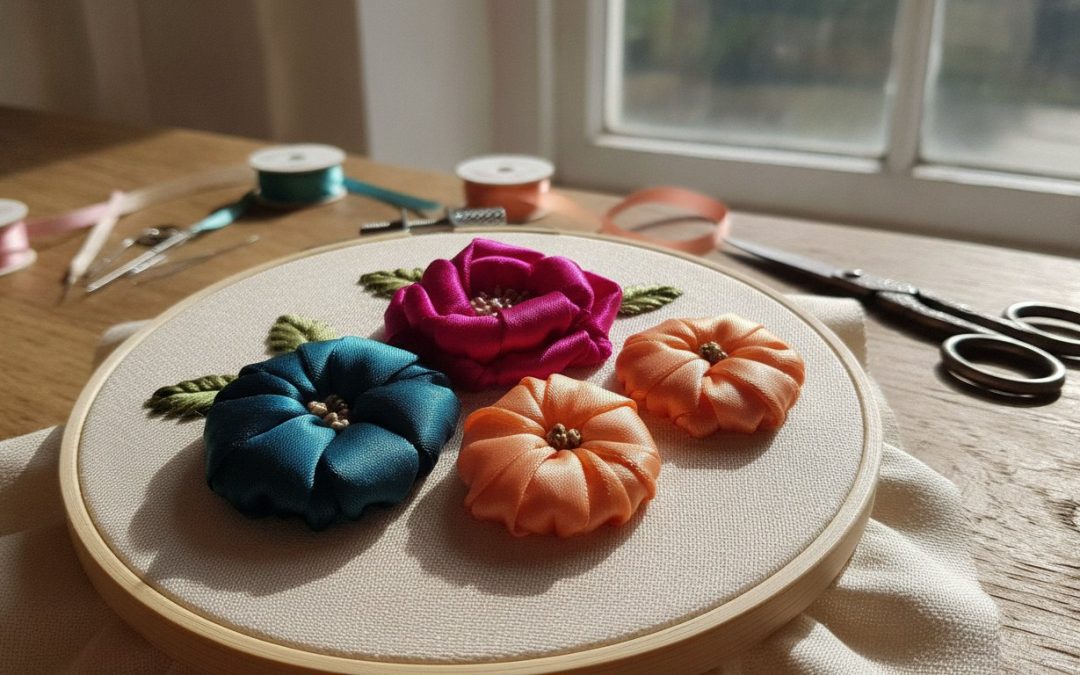
Imagine a garden blooming beneath your fingertips, where every petal possesses the soft sheen of a morning dewdrop. Silk ribbon embroidery is often described as “needle painting” because it uses narrow strips of pure silk rather than traditional threads to build three-dimensional landscapes. Unlike traditional embroidery techniques that often focus on flat, decorative surfaces, this method creates a sculptural relief that mimics the organic curves of nature. The result is a vibrant, tactile piece of art that invites the hand to touch and the eye to linger.
The secret to this depth lies in the unique properties of the fibre itself. Pure silk is celebrated for its natural lustre, soft drape, and an unparalleled ability to hold vibrant, complex dyes. When you select silk ribbon for embroidery, you aren’t just choosing a thread; you’re choosing a material that behaves with intelligence. Unlike polyester ribbons, which are often stiff and abrasive, 100% silk compresses as it passes through the fabric. This allows it to glide through the weave without damaging the ground or distorting your design.
Why Pure Silk Matters for Textile Art
Silk possesses a unique “memory” that allows it to maintain its shape in raised stitches. Whilst synthetic alternatives feel rigid and often resist the needle, pure silk flows with effortless grace. This tactile difference is vital for maintaining the integrity of your work. The ribbon behaves as a partner in your creative journey, bending and folding to create lifelike botanical forms that stay exactly where you place them.
The Aesthetic of Dimension
The true magic happens when light hits the finished work. Silk ribbon creates “stumpwork” effects, providing height and volume without the need for complex wire structures or padding. By pairing these ribbons with a luxury ground like Hand Woven Silk Dupion, you enhance the interplay between the ribbon’s sheen and the fabric’s rich texture. It’s a sensory experience that transforms a simple textile into a living masterpiece.
Selecting Your Palette: Widths, Colours, and Ground Fabrics
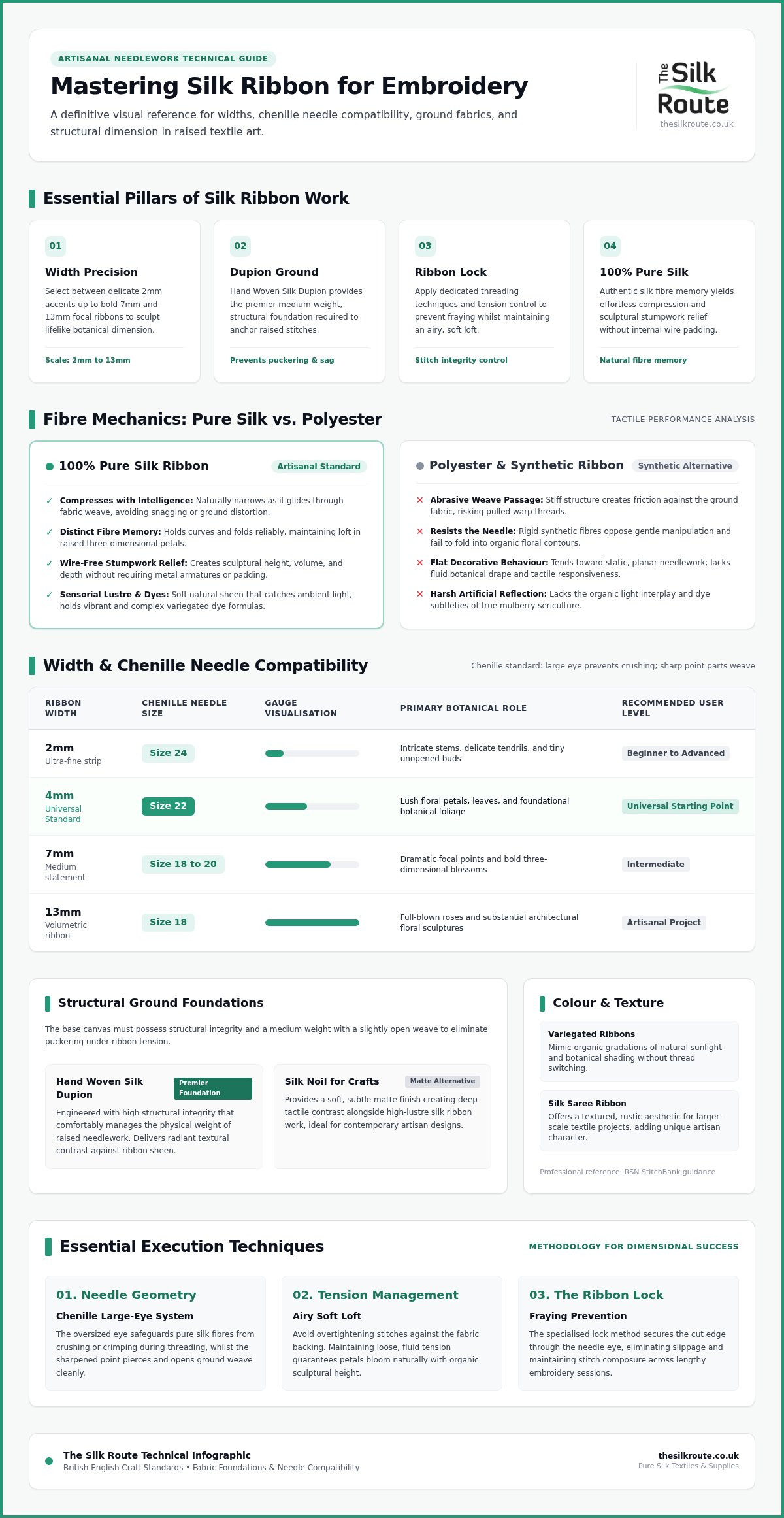
Selecting the correct silk ribbon for embroidery is a painterly process where width defines the stroke. Delicate 2mm ribbons excel at intricate stems or tiny buds, whilst the 4mm width is the universal standard for lush petals and leaves; these two are often the most common starting points for beginners. When you require a dramatic focal point, 7mm or 13mm widths offer the volume needed for full-blown roses. For those seeking a more textured, rustic aesthetic in larger projects, Silk Saree Ribbon introduces an artisan soul that elevates the work. Colour choice is where your botanical life truly awakens. Variegated ribbons are particularly effective, as they mimic the natural gradations of light and shade found in real petals.
The Best Fabrics for Ribbon Embroidery
Your canvas must be as resilient as it is beautiful. A medium-weight ground with a slightly open weave prevents the fabric from puckering under the tension of the ribbon. Hand Woven Silk Dupion is our preferred foundation because its structural integrity manages the weight of raised work with ease. If you prefer a subtle, matte finish to contrast with the ribbon’s lustre, Silk Noil for Crafts offers a wonderful tactile alternative. For deeper technical insights into fabric selection, the RSN StitchBank guide to ribbonwork provides professional guidance for modern creators.
Width and Needle Compatibility
Using the correct needle is non-negotiable. Chenille needles are the standard for silk ribbon for embroidery because their large eye prevents the silk from crushing, while the sharp point opens the fabric weave cleanly. Matching your needle size to your ribbon ensures a smooth passage through the cloth. If you’re ready to begin, our Hand Woven Silk Dupion provides the ideal starting point for your project.
| Ribbon Width | Needle Size (Chenille) |
|---|---|
| 2mm | 24 |
| 4mm | 22 |
| 7mm | 18 to 20 |
| 13mm | 18 |
A Beginner’s Masterclass: Essential Techniques and Stitches
Mastering silk ribbon for embroidery begins with a physical dialogue between the artist and the fibre. Before your first stitch, you must secure the medium using the “Ribbon Lock” method. This involves threading the ribbon through the needle eye and then piercing the tip through the ribbon itself, approximately 12mm from the end. This prevents the silk from slipping whilst you work. Unlike traditional needlework, this art form requires a “loose hand” to maintain the ribbon’s loft. Tension should be gentle; pulling too tight crushes the delicate filaments and robs the piece of its three-dimensional life.
To ensure a professional finish, avoid bulky knots on the reverse of your fabric. Instead, leave a short tail and secure it by stitching through it with your next movement. This keeps the back of your work flat and prevents distortion. Because silk is a protein fibre, it remains susceptible to environmental damage. Following preventive conservation guidelines for textiles ensures your handiwork remains vibrant for generations.
Three Foundational Stitches for Every Project
The Straight Stitch creates elegant, elongated leaves and simple petals with minimal effort. The Ribbon Stitch is the foundational movement of this art form, where the needle pierces the ribbon itself as it returns through the fabric to create a realistic, curled petal tip. French Knots, particularly when using 2mm ribbon, add exquisite texture to flower centres or “mimosa” effects that catch the light beautifully.
Troubleshooting Common Ribbon Issues
Ribbons naturally twist during use. Use a laying tool or your finger to untwist the silk mid-stitch so it catches the light correctly. If you encounter a snag in your delicate silk, a gentle wisp of steam from a distance can often relax the fibres back into place without damaging the lustre.
Discover our artisan silk saree ribbons for your next masterpiece
Sourcing and Caring for Your Silk Masterpieces
To maintain the integrity of your art, sourcing authentic silk ribbon for embroidery from a specialist supplier is paramount. This ensures 100% purity and consistent dye lots, which are vital when completing larger botanical scenes. Expert guidance helps you navigate the tactile differences between silk types, ensuring your materials match your creative vision. Store your ribbons in a cool, dark place; direct sunlight is the enemy of vibrant colour. If your finished work requires cleaning, avoid the washing machine at all costs. Instead, choose professional dry cleaning or simple airing to preserve the fibre’s natural lustre and delicate shape.
Don’t be afraid to push the boundaries of traditional needlework. Integrating Silk Saree Yarn UK alongside your ribbon work adds a rugged, artisan depth that contrasts beautifully with smooth silk petals. This mixed-media approach brings a modern soul to an ancient craft.
Organising Your Creative Space
Keep your creative sanctuary tidy by using cards or bobbins to ensure your ribbons remain tangle-free. A dedicated embroidery hoop or slate frame is essential whilst you work. It maintains the ground fabric’s tension, preventing the puckering that can occur with heavier raised stitches or wider ribbons.
Preserving Your Finished Work
When you frame your masterpiece, use a deep mount or a “spacer” within the frame. This prevents the glass from crushing your raised silk petals, preserving the three-dimensional relief you’ve worked so hard to achieve. Always insist on acid-free backing materials to prevent chemical degradation over the years. This thoughtful approach ensures your sensory exploration of light and texture remains a lasting heirloom.
Awakening Your Creative Vision
The transition from a simple sketch to a blooming landscape requires more than just technique; it demands a partnership with the finest natural fibres. By mastering the delicate “Ribbon Lock” and selecting the appropriate width for your botanical details, you’ve unlocked the potential to create truly sculptural art. You now understand how the interplay of light on Hand Woven Silk Dupion elevates every stitch, and how proper conservation ensures your work remains an heirloom. Choosing the right silk ribbon for embroidery is the first step in a journey that awakens the senses and rewards the soul. Our role as a specialist UK-based supplier is to provide the exceptional quality and personalised expert advice your creativity deserves.
Whether you’re a seasoned artist or a curious beginner, the path to a three-dimensional masterpiece is paved with pure, lustrous silk. We invite you to explore the possibilities and let your imagination take flight across the cloth.
Frequently Asked Questions
What is the best width of silk ribbon for a beginner to start with?
For those beginning their journey, the 4mm width is the most versatile and forgiving silk ribbon for embroidery. It provides enough surface area to master basic stitches like the ribbon stitch whilst fitting comfortably through standard fabric weaves. Beginners often find that starting with 2mm or 4mm ribbons allows them to develop a “loose hand” without the bulk of wider varieties, ensuring a graceful introduction to this tactile craft.
Can I wash fabric that has been embroidered with silk ribbon?
We recommend avoiding traditional laundering to preserve the delicate relief and natural lustre of your work. Silk is an animal protein fibre that degrades in alkaline environments and can lose its vibrant colour if saturated. If cleaning is essential, seek professional dry cleaning or use a distant fine water mist to refresh the fabric. Airing your masterpiece in a shaded, well-ventilated space is often sufficient to maintain its pristine appearance.
Do I need special needles for silk ribbon embroidery?
Specialised needles are essential to protect the integrity of your materials. Chenille needles, typically in sizes 18 to 24, feature a large eye to prevent the silk filaments from crushing and a sharp point to open the fabric weave cleanly. This ensures the ribbon glides through the ground fabric without snagging. Using the correct needle size for your chosen silk ribbon for embroidery is a non-negotiable step for achieving a professional, effortless finish.
How do I stop my silk ribbon from fraying whilst I work?
Preventing fraying begins with the “Ribbon Lock” technique, which anchors the silk firmly to the needle eye. It’s also wise to work with shorter lengths, ideally between 30cm and 40cm, to reduce the friction caused by repeatedly passing the ribbon through the fabric. Cutting the ends at a sharp 45-degree angle further minimises shedding. These small, methodical adjustments protect the delicate selvedges and ensure your stitches remain crisp and lustrous throughout the project.
Is silk ribbon embroidery faster than traditional thread embroidery?
You’ll likely find that ribbon work progresses significantly faster than traditional thread embroidery. Because a single ribbon stitch covers more surface area than multiple strands of floss, you can build lush floral forms and textured landscapes with fewer movements. This efficiency doesn’t sacrifice detail; instead, it allows you to focus on the sensory experience of sculpting with light and volume. It’s a remarkably rewarding technique for those who enjoy seeing their visions bloom rapidly.