

What if the most compelling part of an overlay is the fabric it reveals? It’s natural to wonder how a sheer layer will shift the colour and texture beneath it, or whether the finished look will feel too crisp, too soft or too busy. Silk organza for overlays can bring lightness, movement and definition, but the result depends on how you pair and place it.
This guide explains how organza changes the appearance of the layer beneath and compares ways to use it in bridal sleeves, skirts and bodices. It also explores other garments where a translucent layer can add depth without hiding the design underneath. Start with the effect you want, then test how the fabric pairing and placement work together.
Key Takeaways
- An organza overlay changes the appearance of the fabric beneath, adding a sheer finish and visual definition.
- Silk organza can be used across bridalwear and occasionwear, with the base fabric shaping the final effect.
- Choose the look you want first, then compare organza with the base fabric in different lighting.
- The Silk Route supplies silk organza and other 100% silk fabrics for considered overlay projects.
What silk organza brings to an overlay
An overlay is a layer placed over a base fabric to change its appearance. Silk organza catches the light and adds a crisp, sheer presence, while leaving the fabric beneath visible. This can make the base colour or texture feel softer, more luminous or more defined.
Organza is a sheer, plain-weave fabric traditionally made from silk. Its translucency means the base fabric contributes strongly to the finished effect. Consider silk organza for overlays alongside the fabric it will cover, rather than judging the organza on its own.
How does a sheer layer change the fabric beneath?
Light passing through organza and reflecting from the base fabric can shift the overall impression. Closely matched colours tend to blend into a quiet tonal effect, while contrasting colours create clearer definition between the layers. Neither approach is automatically right for every design. Place the actual fabrics together and view them in daylight and indoor lighting, as the relationship can look different as the light changes.
Where can an organza overlay add visual interest?
Each garment area gives you a different way to direct attention. The design and fabric pairing determine whether the result feels soft, sculptural or defined.
- Sleeves: A translucent layer can soften their appearance, while organza’s crispness can help define the outline.
- Skirts: An overlay can add colour and movement while keeping the silhouette beneath visible.
- Bodices: Organza can add depth and gently temper the base fabric’s colour or surface.
- Detachable layers: An overskirt or other removable element can change the volume and transparency of a look.
Use these as starting points, not rules. Compare the fabrics in the intended part of the design, since colour, texture and placement all affect the final mood.
Silk organza overlay ideas for bridal and occasionwear
The same sheer layer can create different effects depending on what lies beneath it. Silk organza for overlays can soften a smooth surface, frame a textured one or add a fine veil of colour. Begin with the mood you want to create, then decide where the overlay will work hardest.
Pairing organza with satin, dupion or another silk
Over silk satin, organza can temper the surface’s gentle lustre without concealing it. Over silk dupion, its translucency can add depth while allowing the texture to show through. Closely matched colours can create a quiet tonal composition; a stronger contrast makes the boundary between the fabrics more noticeable. Compare the fabrics together before deciding. If you’re planning a coordinated bridal party palette, this guide to silk for bridesmaid dresses offers a related perspective on selecting silk for occasionwear. For wider textile context, industry organisations such as the National Council of Textile Organizations share fabric resources.
Using an overlay for sleeves, skirts and bodice details
Let the intended silhouette lead your placement choices. These starting points can help you assess the effect:
- Skirt: A full overlay adds a translucent layer while leaving the skirt’s outline visible. Decide whether its colour should blend with or contrast against the base.
- Sleeve: A sheer panel can make the arm area a focal point. The panel’s outline and the amount of visible base fabric affect whether the detail feels delicate or defined.
- Bodice: A small overlay panel can draw attention to texture or colour without covering the whole garment. Consider the surrounding details to avoid a crowded effect.
Gathers can make layered areas look denser, while seams and finished edges may draw attention to the overlay’s outline. Before applying the treatment across a whole garment, make a small visual sample using the intended fabrics and placement. The Silk Route’s silk organza and other silk fabrics give you options to explore for a considered pairing.
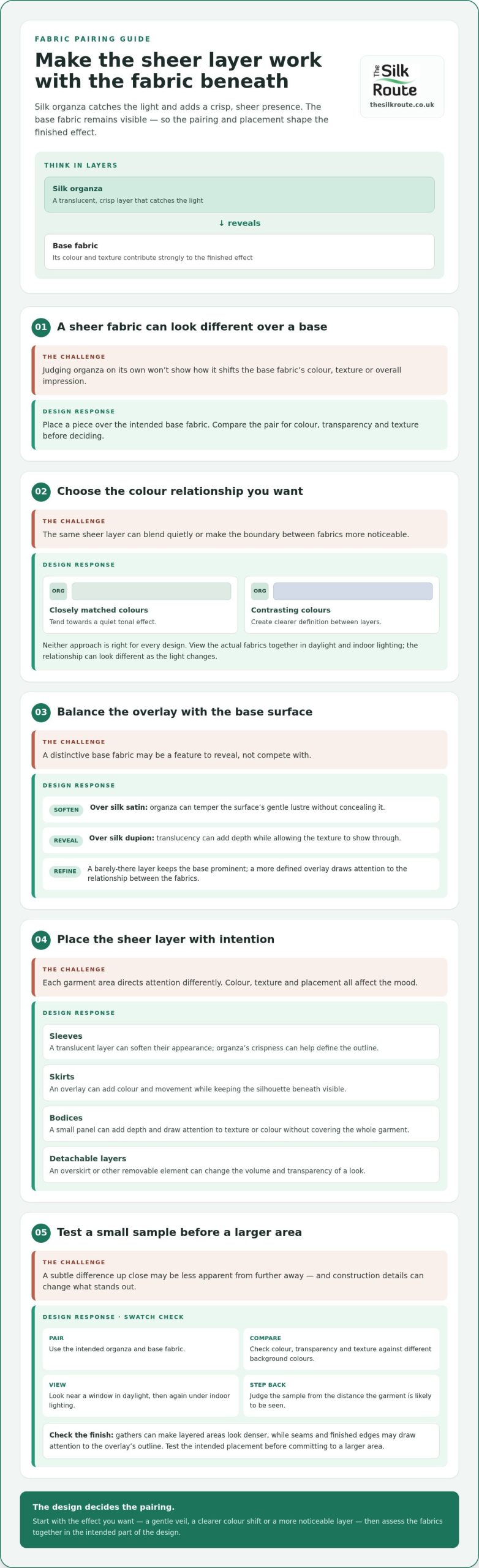
How to choose an organza overlay that suits your design
Start with the effect you want: a gentle veil, a clearer colour shift or a more noticeable layer. Choose the base fabric for your design, then test how organza changes its appearance. This keeps the decision centred on the garment, rather than on the sheer fabric viewed alone. There’s no single overlay treatment for every silhouette. A detail intended to feel delicate needs a different balance from one designed to frame or define.
A practical fabric-swatch comparison
Place a piece of organza over the intended base fabric and compare the pair for colour, transparency and texture. Try the sample against different background colours, then view it near a window in daylight and again under indoor lighting. Step back to the distance from which the garment is likely to be seen: a subtle difference up close may be less apparent from further away. Note which combination best matches your design intention.
Balance transparency, structure and visual detail
A barely-there layer keeps the base fabric prominent; a more defined overlay draws attention to the relationship between the two fabrics. If your base already has a distinctive surface, a restrained overlay can help preserve its character. For example, the texture and lustre of hand woven silk dupion may be a feature to reveal rather than compete with. Decide whether the organza should soften that surface or simply add a fine change in colour and light.
Use your swatch to refine the design before committing to a larger area. Adjust the amount of organza, its placement or the colour pairing until the result works with the intended silhouette. Comparing a sample makes it easier to judge the overall effect, not just the fabric in your hand.
See silk organza for overlay projects
Finding silk organza for your next overlay project
A considered overlay starts with the effect you want: a softened surface, a hint of contrast or a translucent layer that adds depth. Set that intention beside your chosen base fabric and consider how the colours relate. A sample pairing will show whether the organza complements the base or shifts its appearance in an unexpected way.
Keep the silhouette in view as you make your choice. An overlay across a broad area creates a different impression from a small panel or sleeve detail. Think about where you want the eye to settle and how much of the base should remain visible. Comparing the fabrics together, rather than selecting by colour alone, helps you judge the overall effect.
Turn a visual idea into a considered fabric choice
Bring together three things: the silhouette you have in mind, the fabric beneath the overlay and the effect you hope to achieve. A sample helps you assess their colour relationship in different settings. If you’re weighing silk organza against another silk, The Silk Route’s personal project guidance can help you consider fabric categories such as silk satin, dupion, velvet and habotai in relation to your design.
The Silk Route is a specialist supplier of silk organza and other 100% silk fabrics for creative projects. Whether you’re developing bridalwear, occasionwear or another garment, let the intended look guide your fabric choice. Explore silk fabrics at The Silk Route as you shape an overlay that feels true to your design.
Let your next fabric choice shape the design
An overlay can do more than finish a garment: it can set the mood, frame a detail or give a familiar silhouette a fresh point of view. Before moving from an idea to a full design, note what you want the organza to reveal and where you want the eye to rest. That intention gives your choice of silk organza for overlays a clear creative purpose.
The Silk Route supplies 100% silk fabrics and offers personal guidance for hobbyists and professionals developing projects of different scales. Bring your design idea, preferred base fabric and colour direction together as you explore the possibilities. A thoughtful pairing can help a sheer layer feel integral to the garment rather than simply added on.
Give yourself room to experiment. The right combination can turn a first sketch into a piece with its own quiet character.
Frequently Asked Questions
Can silk organza be used as an overlay for a wedding dress?
Yes, silk organza for overlays can work on a wedding dress, either across a larger area or as a considered accent. Its translucency keeps the design beneath visible while giving the surface a distinct finish. For a cohesive result, assess the overlay alongside the dress’s lining and any lace or embellishment, rather than judging it only against the main fabric.
What fabric can I layer under silk organza?
Silk satin, silk dupion and other suitable dress fabrics can sit beneath organza. A smoother base creates a more uninterrupted field of colour, while a visibly textured silk gives the eye another surface to read. Consider the lining too: an opaque layer beneath the base fabric may change how much of the body or understructure is visible through the full combination.
Does silk organza change the colour of the fabric underneath?
Yes, it can change the perceived colour, although it doesn’t recolour the base fabric itself. Pale organza over a deeper shade may make the base seem softer, while a contrasting hue can create a more noticeable cast or boundary. Judge the actual combination rather than relying on colour names, as a subtle shift can have a different effect across a large garment panel.
How do I choose between silk organza and tulle for an overlay?
Choose organza for a sheer woven surface with a more defined visual plane; choose tulle if its open net appearance better suits the airy, patterned effect you have in mind. The two can also look different over motifs or embellishment. Compare samples over the same base fabric, then decide which surface supports the garment’s mood without competing with its details.
How can I test a silk organza overlay before sewing the garment?
Before cutting into the garment fabric, position a swatch over the intended area using pins or clips, with the same number of layers planned for the design. View it on a dress form or against the wearer, then move and sit to see how folds and overlap affect the look. Take a photograph to compare the sample with your original reference.