
The silk with the brightest lustre may not be the one that brings a room to life. A slubbed, softly reflective weave can add as much character as a smooth, light-catching surface. When choosing silk fabric for interior design, product descriptions can make fabrics sound alike, even though their textures and effects in a room may differ considerably.
It’s understandable to feel unsure when you can’t see a fabric beside your chosen colours, woods or finishes. Whether you are styling soft furnishings around vintage centrepieces featured on midcenturydesignco.com or working with sleek contemporary cabinetry, consider how its surface catches light and contributes to the atmosphere you want, rather than judging it in isolation.
This guide compares silk textures and finishes, from the crisp character of Dupion and the translucency of Organza to the sheen of Satin, the depth of Velvet and the quieter surface of silk noil. You’ll learn how to weigh mood against practical needs, with The Silk Route’s specialist range of 100% silk fabrics and personal expert guidance to support your selection.
Key Takeaways
- Silk fabric for interior design can look different as light, viewing angle and surrounding materials change.
- Compare the textured character of Dupion with the fluid sheen of Satin and the delicate transparency of Organza.
- Choose fabric by considering the room’s mood, intended application, palette and neighbouring materials, then assess it in the space.
- Explore a specialist selection including hand-woven and power-woven Indian Silk Dupion, Velvet, Habotai, raw silk and silk noil.
What Makes Silk Fabric Distinctive in Interior Design?
Silk fabric for interior design is a natural-fibre textile valued for its lustre, tactile character and varied woven surfaces, each bringing a different visual note to a scheme. Weave and finish make a difference: a crisp, irregular surface reads differently from smooth Satin or plush Velvet, even when each is silk.
Silk’s appearance can shift throughout the day. Daylight may reveal subtle changes in the surface, whilst artificial lighting can bring out a stronger gleam or soften it. The viewing angle also affects how reflective areas catch the eye. Beside matte paint, polished wood or other fabrics, the same silk may appear more luminous, restrained or textural. These are visual impressions, not guarantees of how a fabric will perform in a particular setting. For historical context on the material’s long cultural story, explore this overview of the history of silk.
How silk texture and lustre shape a room
A slubbed surface brings visible variation, while a smooth finish creates a cleaner, more continuous impression. Sheer silk allows light and surrounding forms to remain part of the composition, while a plush surface adds visual depth. Reflective finishes can make a scheme feel more animated as light and viewpoint change. Compare both handle and appearance rather than relying on a fabric name alone.
Which interior projects can silk inform?
Silk can help shape considered interiors through decorative elements and soft furnishings, bringing texture, colour and light into the wider composition. An appealing appearance doesn’t automatically make a fabric suitable for every application. The intended use, the room and the effect you want all matter. For a broader planning prompt, see this soft furnishings checklist.
Compare Silk Fabric Types for Interior Design by Texture and Finish
Weave and surface shape the impression silk makes in a room, influencing how it catches light, feels to the touch and sits alongside other materials. When choosing silk fabric for interior design, compare the character of each fabric rather than treating “silk” as one uniform finish.
| Fabric | Visual character | Handle and possible design role |
|---|---|---|
| Dupion | Distinctive slubs and a visibly textured surface | Crisp in impression; brings detail and structure to a scheme |
| Satin | Smooth, lustrous surface | Fluid in appearance; introduces a polished, light-catching note |
| Organza | Sheer and translucent | Light in feel; offers a delicate, layered effect |
| Velvet | Plush surface with visual depth | Soft to the touch; creates a richer, more enveloping impression |
| Habotai | Smooth, comparatively light character | Offers a quieter, lighter presence in a composition |
| Raw silk | Natural-looking surface variation | Brings an organic, less uniform visual quality |
| Silk noil | Textured, softly irregular appearance | Adds a tactile, understated note |
When does Dupion, Satin or Organza suit the scheme?
Start with the mood you want to create. Dupion’s slubs can lend a scheme artisanal texture; Satin may feel more fluid and refined, whilst Organza’s sheerness can keep a composition visually delicate. These are design impressions, not guarantees of performance. For a closer look at Dupion’s surface, explore the hand-woven Silk Dupion guide.
Where do Velvet, Habotai and raw silk differ?
Velvet’s plush pile contrasts with Habotai’s lighter feel and raw silk’s naturally varied character. Silk noil offers another distinct, textured option. Comparing the fabrics side by side makes it easier to see which surface fits your scheme. Explore the specialist silk fabric selection as you refine your choice.
How to Choose Silk Fabric for an Interior Design Scheme
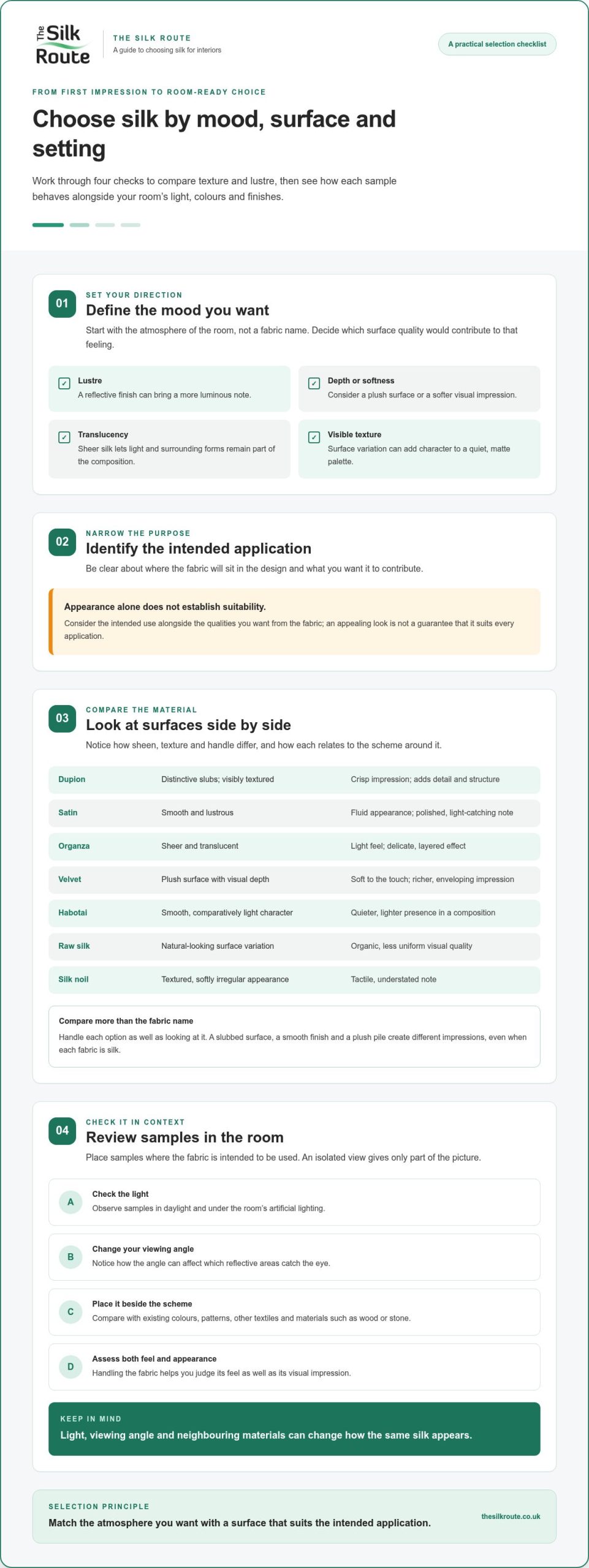
Begin with the feeling you want the room to have, then narrow your options by surface and intended application. Use this four-step framework to compare silk fabric for interior design before settling on a direction.
- 1. Define the mood. Decide whether the scheme calls for lustre, depth, softness, translucency or visible texture. A quiet, matte palette may benefit from subtle surface variation, whilst a more luminous scheme might suit a reflective finish.
- 2. Identify the application. Be clear about where the fabric will sit in the design. Appearance alone doesn’t establish suitability, so consider the intended use alongside the qualities you want the fabric to contribute.
- 3. Compare surfaces. Look at candidate fabrics beside one another. Notice how their sheen, texture and handle differ, and how each relates to existing colours, patterns, other textiles and materials such as wood or stone.
- 4. Review samples in the room. Place samples where the fabric is intended to be used. Observe them in daylight and under the room’s artificial lighting, from different angles and beside surrounding finishes.
Refine the choice with specialist guidance
Comparing several silk types can turn a broad preference into a clearer material direction. The Silk Route’s specialist selection spans Indian Silk Dupion, Organza, Satin, Velvet, Habotai, raw silk and silk noil, with personal expert guidance to support fabric exploration and selection. For more on sourcing, read the specialist silk fabric supplier guide.
Selection principle: Match the atmosphere you want with a fabric surface that suits the application, then assess it in the room where it will be seen.
Explore Silk Fabric for Interior Design with The Silk Route
A well-chosen silk surface can become a quiet counterpoint or a defining detail in an interior scheme. The Silk Route’s specialist selection gives designers several ways to bring silk into a project, with hand-woven and power-woven Indian Silk Dupion alongside Organza, Satin, Velvet, Habotai, raw silk and silk noil.
Find a silk surface that supports your design vision
Return to the qualities that matter most to your scheme. Dupion brings visible texture; Satin offers a smoother lustre; Organza is sheer; Velvet has a plush surface; and raw silk and silk noil bring distinct natural-looking irregularities. These fabrics aren’t interchangeable. Each creates a different impression, so weigh the mood, application and surrounding materials before narrowing your choice.
Take the next step from inspiration to selection
Exploring several silk types side by side makes the choice more tangible, particularly when descriptions alone don’t convey how a surface looks and feels. The Silk Route’s specialist knowledge and personal expert guidance support fabric exploration and selection for interior projects, helping you consider different textures and finishes in relation to your design vision.
Browse the range at your own pace, and explore silk fabrics at The Silk Route.
Let the Right Silk Shape Your Scheme
Choose silk fabric for interior design for the atmosphere it helps create, not just its name or lustre. Dupion’s texture, Satin’s smooth sheen, Organza’s sheerness and Velvet’s plushness each bring a distinct note. Compare fabrics beside your scheme’s colours and materials, then view and handle them in the room’s changing light before deciding.
The Silk Route is a specialist supplier of 100% silk fabrics, with hand-woven and power-woven Indian Silk Dupion among its wider selection. Personal expert guidance can support your exploration, from comparing textures to refining a choice for your project.
Take your time, compare what you see and feel, and explore The Silk Route’s silk fabrics to find a surface that brings your design vision into focus.
Frequently Asked Questions
What is the best silk fabric for interior design?
The best silk fabric depends on the intended application, desired atmosphere and surface you prefer. Textured Dupion can bring visible detail, whilst smooth Satin offers a more lustrous impression. Sheer Organza creates a sense of lightness, and plush Velvet introduces softer-looking depth. There’s no universal winner: compare fabrics with your scheme’s colours and materials to see which surface feels right for the room.
Is silk fabric suitable for interiors?
Silk can bring distinctive texture, lustre and colour to considered interior schemes, but its suitability depends on where and how it will be used and on the project’s practical requirements. Don’t assume one silk will suit every setting or application. Start by defining the intended use and desired effect, then compare surfaces and assess them in the room using the selection framework in this article.
What is the difference between silk Dupion and silk Satin for interiors?
Silk Dupion has a visibly textured surface, whilst silk Satin appears smoother and more lustrous. In a room, Dupion may lend a scheme a tactile, irregular note; Satin can create a sleeker impression as light moves across its surface. These differences relate to appearance and design character. Compare both beside your palette and neighbouring materials to judge which effect better supports your scheme.
Can silk Organza be used in interior design?
Silk Organza’s sheer quality can bring lightness and layered visual depth to an interior scheme. Its translucency allows shapes and colours behind it to remain part of the overall impression, creating a delicate effect. Whether it suits a particular project depends on the intended application and practical requirements. Consider the role you want it to play, then assess the fabric alongside the room’s finishes and light.
How do I choose a silk fabric colour and texture for a room?
Begin with the mood you want and the fabric’s intended application, then compare colours and surfaces beside the room’s existing palette, patterns and materials. Handle the fabric and view it in the project’s lighting, both natural and artificial. Lustre and texture can affect how a colour appears as light or viewing angle changes, so assess the visual effect in context rather than assuming an exact match.