The silk with the most luxurious sheen may be the least convincing choice for your historical costume. Finding the best silk for historical costumes isn’t simply a matter of choosing a beautiful colour or a fabric labelled “period”; the weave, finish and drape all shape how a garment looks and behaves. It’s understandable to feel uncertain, especially when a modern fabric seems at odds with the silhouette you’re trying to recreate.
The most reliable choice is one supported by evidence for your period and suited to the garment’s structure and intended use. This guide compares silk weaves by their appearance and practical qualities, helping you weigh crispness against fluidity, sheen against texture, and visual appeal against ease of construction. You’ll find a framework for checking suitability, comparing options such as dupion, organza, satin and velvet, and deciding what to assess before you cut.
Key Takeaways
- Choose the best silk for historical costumes by checking evidence for the period, place and garment, rather than relying on appearance alone.
- Compare each weave’s texture, lustre and drape with the shape and structure your costume needs.
- Use a reference-led checklist, then sample fabric to assess how it handles seams, lining and movement before committing.
- Explore specialist silk options, including dupion, organza and satin, with your project’s practical demands in mind.
Choosing silk for historical costumes: start with the garment, not the weave
Which silk should you choose for your historical costume? There’s no universal answer. A fabric that supports one silhouette may hang quite differently in another, and a convincing sheen alone doesn’t make a textile period-appropriate.
Historical plausibility means choosing a fabric consistent with the garment’s period, place and purpose, supported by relevant surviving examples or historical records. Start with the evidence, then decide how closely your project aims to follow it. Silk’s history spans different regions and periods, as outlined in History of silk, so avoid treating “historical silk” as one unchanging category.
What makes a silk plausible for a particular period?
Look for dated garments and reputable museum collections, including the Victoria and Albert Museum. Check that each example matches your intended period, location and garment type. Surviving pieces and written records are valuable, but they offer only a partial view: not every wearer or garment was preserved or documented. Treat a reference as evidence to weigh, rather than proof that one fabric suits every interpretation.
Which costume details should guide fabric choice?
Before comparing weaves, note the silhouette and the fabric behaviour it requires. A close-fitting bodice may need more body than a flowing sleeve. A full skirt’s shape may depend on its construction and supporting layers. Consider:
- Weight and drape: will the fabric hold a shape or fall softly?
- Surface and sheen: does its texture and lustre suit the reference?
- Use: will the costume be worn often, moved in, or mainly displayed?
Separate documented choices from design decisions. If you’re creating a theatrical interpretation, a modern-looking finish may be intentional. Describe it as an artistic choice, not established period evidence. That distinction makes it easier to identify the best silk for historical costumes for your particular brief. Similarly, if you are styling an ensemble for a period gala or ball, you can check out Just Posh Masks to find authentic accessories that complement your attire.
Compare silk fabrics for historical costumes by texture, sheen and structure
Once you have a garment reference, compare fabrics by how they look and behave. These qualities can help narrow your options, but they don’t establish historical provenance. A modern silk that resembles a reference still needs evidence to support its use for that period and place.
| Fabric | Texture and lustre | Drape and project considerations |
|---|---|---|
| Dupion | Distinctive slubs give the surface an irregular, textured look; lustre can vary. | Its body and surface may suit a project where the reference supports that appearance. Check the fabric itself, as qualities vary. |
| Organza | Sheer, with a light, crisp-looking surface. | Can add a translucent layer, though its transparency and structure may not suit every garment. |
| Satin | Smooth surface with a noticeable lustre. | Often catches light and falls differently from crisp fabrics; assess its weight and drape for your pattern. |
| Velvet | Pile creates a soft, raised surface and rich visual depth. | Its pile affects appearance and handling. Consider how it will sit in seams and move in the finished costume. |
When might silk dupion suit a costume project?
Dupion’s characteristic slubs are part of its appeal, but they aren’t automatically right for every historical period. Compare the texture with your chosen garment reference before deciding. For a closer look at its weave, explore this silk dupion fabric guide.
How do organza, satin and velvet change the effect?
Organza introduces transparency, satin reflects light across a smooth face, and velvet’s pile gives it a tactile, shaded surface. Their drape and structure depend on the particular fabric, so handle or sample it before cutting. Don’t assign any of these weaves to a period without a reliable garment or collection reference.
Fabric behaviour describes how a silk looks and handles; provenance is evidence for where and when it was used. The best silk for historical costumes is the one that meets both the evidence and the demands of your design.
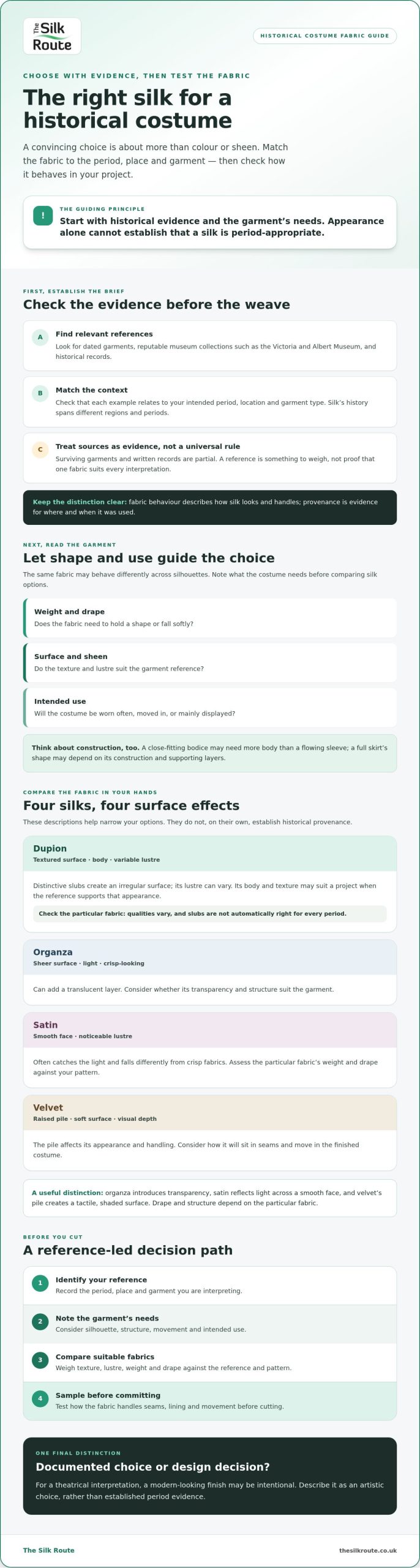
How to choose the right silk for your historical costume project
A beautiful fabric still needs to work with your pattern, construction and intended use. A costume worn repeatedly on stage may face different demands from one intended mainly for display. Let your project criteria guide the decision.
Identify your reference, note the garment’s needs, compare suitable fabrics, then sample before committing. This sequence helps you weigh historical evidence alongside practical considerations, rather than choosing by colour or lustre alone.
What should you check before ordering costume silk?
Read the supplier’s fabric description carefully. Check the fibre composition, weave description, width and care information, then consider whether each detail suits your pattern and construction plans. Width affects how pattern pieces can be laid out, while care requirements matter if the costume will be worn or handled often.
Where possible, assess a sample before ordering for a larger project. View it in daylight and in the lighting where the costume will be worn or displayed. Compare its colour and surface with your reference, then handle it: does it fall, crease and hold a seam as you expect? Consider how lining will affect the finished weight and movement, too.
How can a maker balance accuracy and wearability?
For a closely researched reconstruction, give documented evidence priority and record where a practical choice differs from the reference. A theatrical interpretation or costume for repeated performance may call for a considered compromise, especially if movement, seam strength or care is a concern. Be clear about what is evidence-led and what is a design decision.
Once you’ve set those priorities, compare silk categories such as dupion, organza, satin or velvet against them. The best silk for historical costumes is the one that respects your reference while behaving suitably for the garment’s real conditions. The Silk Route’s silk range and guidance can help you explore options for your project.
Find silk for historical costumes with specialist guidance
There’s no single fabric that earns the title of best for every period costume. A considered choice brings together evidence for the reference, the way the garment needs to move and hold its shape, and the conditions in which it’ll be worn or displayed. A specialist silk supplier can help you understand the fabric in front of you, but historical accuracy still depends on your research and the match between that evidence and your project.
The Silk Route is a specialist supplier of silk fabrics, not a maker of finished historical costumes. Its range includes Indian silk dupion, silk organza, silk satin and silk velvet. These are options to assess against your brief, not automatic recommendations for any particular period.
What can a specialist silk supplier help you assess?
Before choosing, ask about the fabric’s composition and weave, and how its weight, surface and drape may behave in your intended construction. Explain whether the silk will be lined, gathered, shaped or used in a part of the costume that needs to move. This can help you compare practical qualities without confusing them with proof of historical use. If dupion is on your shortlist, the Hand Woven Silk Dupion guide can help you explore its weave in more detail.
What is the next step after narrowing your options?
Compare a sample with your garment reference in suitable light, checking colour, lustre and texture together. If you can obtain a sample, test it with offcuts: try the seam finish, pressing method or gathering you plan to use, and see how it moves with any lining. Keep notes on what the fabric does, as well as why you believe it suits the reference.
That pause before cutting can reveal whether a promising silk works in practice. Explore dupion, organza, satin and velvet through The Silk Route, and seek guidance as you refine your choice for the costume you’re creating.
Choose your silk with confidence
The best silk for historical costumes isn’t a universal weave, but the fabric that balances period evidence with the garment’s structure, movement and intended use. Start with a reliable reference, compare the texture, sheen and drape you need, then assess a sample before committing. A beautiful surface matters, but it can’t establish historical accuracy on its own.
The Silk Route is a specialist supplier of 100% silk fabrics, including hand-woven and power-woven Indian silk dupion. Its range also includes organza, satin, velvet and other silk fabrics. Personal guidance is available for projects ranging from hobbyist crafts to professional design, helping you consider different silks without treating any one option as right for every costume.
Take your time with the final choice. A carefully selected fabric can bring your research and making together, giving the finished costume a character that feels considered from the first seam to its final movement.
Frequently Asked Questions
What is the best silk for historical costumes?
The best silk for historical costumes depends on the period, garment and evidence available. Compare a fabric’s weave, texture, sheen and drape with a dated garment reference rather than relying on appearance alone. Dupion, satin, organza and velvet each behave differently, so treat them as options to assess, not universal period matches. A sample can help you judge how a fabric handles before you commit.
Is silk dupion historically accurate for costumes?
Silk dupion may suit a costume when its texture and behaviour align with the garment reference, but the fabric name alone doesn’t establish accuracy. Check evidence for the relevant period and region, including surviving examples and reputable collection records. If you’re aiming for a strict reconstruction, verify the proposed weave against specialist textile research or a documented garment before choosing it.
Which silk is best for a Victorian costume?
No single silk suits every Victorian costume, as styles, layers and materials varied over time. Start with a specific dated garment or pattern reference, then consider the structure, surface and drape required for that design. Check claims about a fabric’s period use against a reputable museum collection or specialist historical costume source, rather than assuming a particular silk is right for the whole era.
Can modern silk be used for historical costume reproductions?
Yes, modern silk can be used, provided you’re clear about how closely your project aims to follow the evidence. Visual resemblance doesn’t prove that a modern fabric is historically equivalent, so compare it with documented examples and note any practical compromises. For theatre or re-enactment, movement, construction and repeated wear may also influence your decision alongside historical plausibility.
How do I choose between silk satin, organza and velvet for a costume?
Begin with the qualities your garment needs: satin has a lustrous surface, organza is sheer and can provide structure, while velvet has a pile. These characteristics describe how the fabrics look and behave, not whether they’re historically accurate for your design. Check the relevant garment evidence, consider construction and intended wear, then review fabric information or samples before deciding.